
The End of Guesswork: Insulin Goes Intelligent
What If Insulin Only Worked When You Actually Needed It?
Persons with Type I diabetes (T1D) lack the cells in the pancreas that release glucose in reponse to blood sugar. Type I diabetes is an autoimmune disease in which the body mistakenly attacks insulin-producing cells, called beta cells. Insulin is required in order for sugar to enter the cells where it can be converted into energy. Without the ability to produce insulin, sugar can rapidly accumulate in the blood after ingesting sugary foods or simple carbohydrates. Too much blood sugar (hyperglycemia) means there is a lack of sugar in the cells and stored fat must be used as an energy source. Breaking down stored fats lead to the production of waste that builds up in the blood in the form of ketones, eventually leading to diabetic ketoacidosis (DKA). Hyperglycemia and DKA over time causes damage to blood vessels, nerves, kidneys, and the eyes. This is why many with T1D are outfitted with a continuous glucose monitor (CGM).
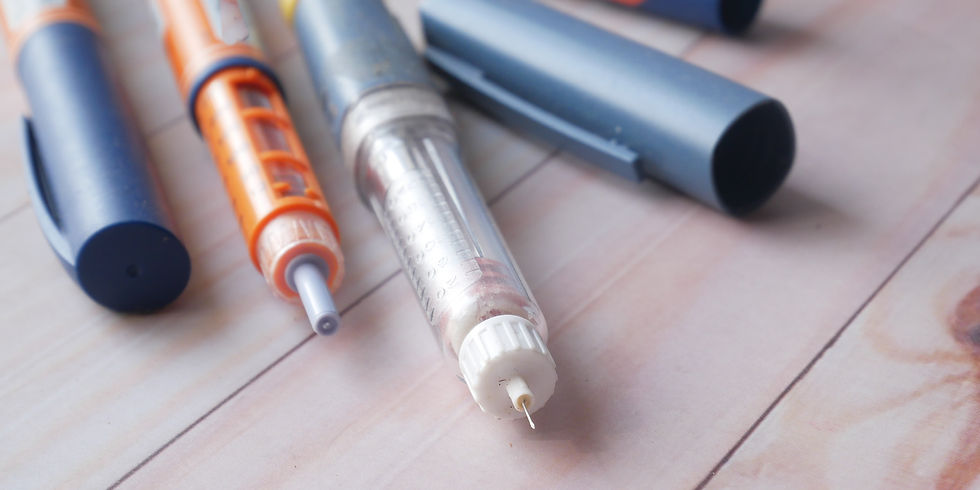
There are multiple different types of insulin that can be used to manage T1D including fast acting around mealtime or long lasting insulin for general everyday management; however, it can be difficult to anticipate the amount of insulin needed to control blood sugar spikes. If too much insulin is administered, blood sugar can drop, leading to hypoglycemia, or low blood sugar. Some devices other than CGMs can help identify the right dose through the use of an automatic insulin pump or use of a 'smart pen' that can passively track how much insulin has been injected, when the last injection happened, and how much is needed for the next injection based on reports from a CGM. Once the insulin has been injected, it immediately becomes active. Guessing the amount of insulin needed to compensate for a spike in blood sugar can be nerve-wracking. In order to avoid triggering hypoglycemia, particularly overnight, lead many to opt for more conservative doses. Unfortunately, long term consequences of conservative insulin dosing can result in suboptimal glucose control. Therefore, closely monitoring and tracking insulin can be cumbersome and affect quality of life for those living with T1D.
Scientist at Novo Nordisk have developed a new type of insulin that can can 'sense' levels of blood sugar and act accordingly - turn on when needed, turn off when not needed - all happening in the bloodstream after the insulin is administered. This is made possible by adding a 'sensor' that changes the shape of the insulin protein in response to interactions with sugar in the blood. When sugar binds to the insulin, it becomes active, allowing glucose to move from the bloodstream into cells for energy. If there isn't much sugar in the blood, the sensor keeps the insulin 'off' by changing the shape of the protein, making it inactive and unable to work. This new type of insulin (NNC2215) is specifically calibrated to respond to human physiological levels of blood sugar becoming most active with high levels and most inactive with blood sugar levels within normal ranges. It is able to automatically calibrate activity based on how much insulin the body actually needs, eliminating the guess work for T1D patients.
Glucose-sensing insulin sounds like something straight out of science fiction, but it is becoming a more attainable treatment as time goes on. It is important to note that this insulin has not been tested in human clinical trials, but remains preclinical, with promising outcomes in animal studies.
References
Hoeg-Jensen T, Kruse T, Brand CL, Sturis J, Fledelius C, Nielsen PK, Nishimura E, Madsen AR, Lykke L, Halskov KS, Koščová S, Kotek V, Davis AP, Tromans RA, Tomsett M, Peñuelas-Haro G, Leonard DJ, Orchard MG, Chapman A, Invernizzi G, Johansson E, Granata D, Hansen BF, Pedersen TA, Kildegaard J, Pedersen KM, Refsgaard HHF, Alifrangis L, Fels JJ, Neutzsky-Wulff AV, Sauerberg P, Slaaby R. Glucose-sensitive insulin with attenuation of hypoglycaemia. Nature. 2024 Oct;634(8035):944-951. doi: 10.1038/s41586-024-08042-3. Epub 2024 Oct 16. PMID: 39415004; PMCID: PMC11499270.
Smith A, Harris C. Type 1 Diabetes: Management Strategies. Am Fam Physician. 2018 Aug 1;98(3):154-162. PMID: 30215903.


Comments